

What James Gunn and Peter Safran’s exit means for DC’s unfinished universe
Another leadership change puts DC’s priorities under scrutiny, from its selective reboot and box office to Peacemaker, Lanterns and the projects still awaiting decisions.
News analysis
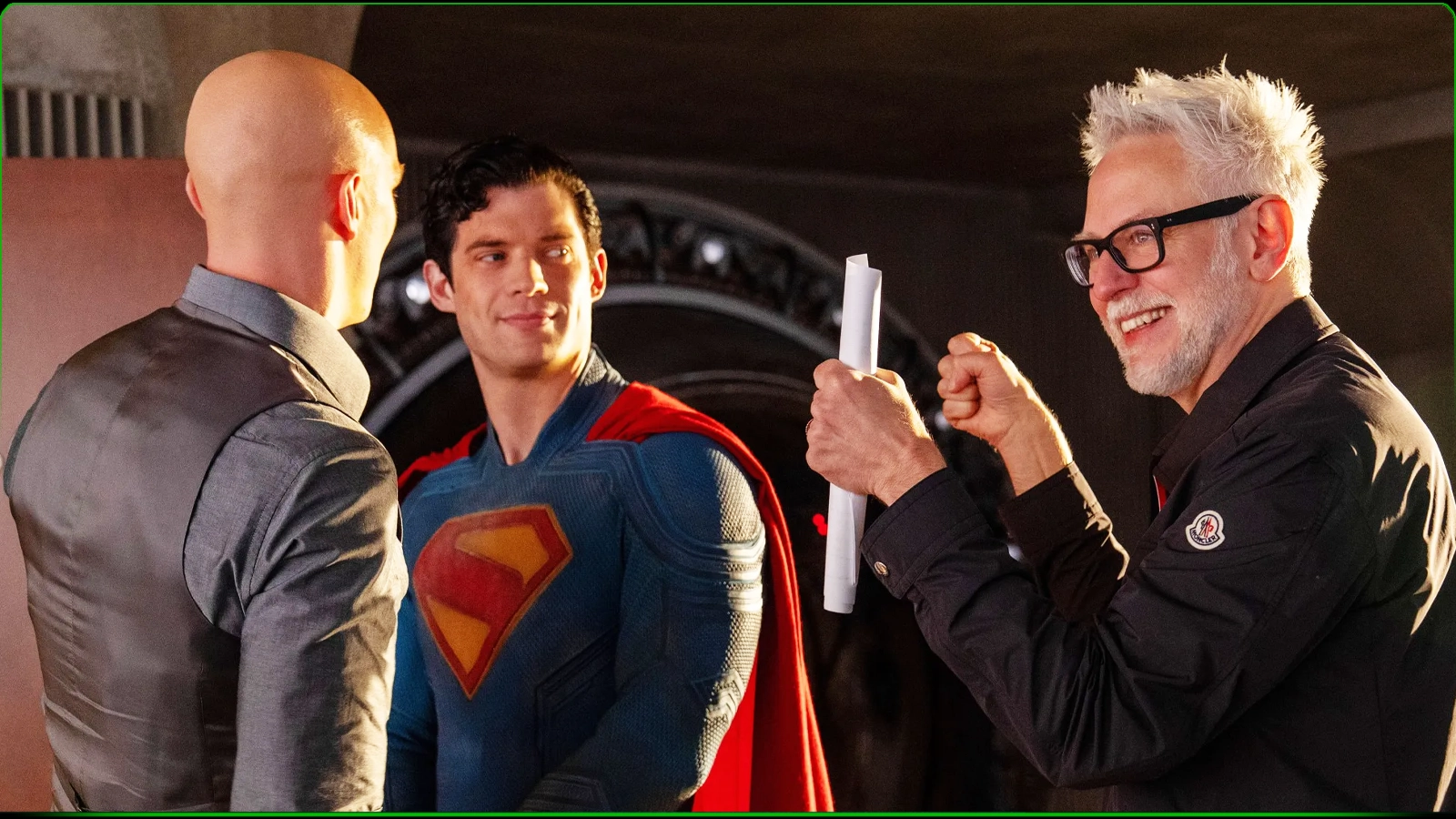
DC is changing bosses before its latest shared universe has finished introducing its biggest heroes.
James Gunn and Peter Safran are stepping away from DC Studios leadership after four years. Former Marvel executive Jeremy Latcham becomes president and chief creative officer on December 1, Skydance announced Monday.
For audiences, the question is what happens to the stories they have already started following. Does this mean another reboot? Did the films fail? Why did some actors survive the previous reset? And what happens to the shows audiences invested in while DC’s new Batman and Wonder Woman films remained in development?
Timeline from the new DC plan to the leadership change
Film dates below are U.S. theatrical openings.
| Date | What happened |
|---|---|
| February 16, 2022 | HBO Max renews Peacemaker for Season 2, creating a commitment that predates the new DC leadership. |
| October 25, 2022 | Warner Bros. Discovery appoints Gunn and Safran to run DC Studios, effective November 1. |
| January 31, 2023 | They unveil Gods and Monsters: an initial ten-project film and television slate. |
| December 5, 2024 | Creature Commandos launches the new shared universe on screen. |
| July 11, 2025 | Superman opens, introducing David Corenswet’s version of the character in the new universe’s first theatrical film. |
| August 21, 2025 | Peacemaker Season 2 premieres, bringing Cena’s series into the new continuity. |
| June 26, 2026 | Supergirl opens. Its disappointing commercial performance becomes a major setback for the young franchise. |
| August 16–October 4, 2026 | Lanterns airs its first season: an August premiere followed by a finale with a series-high three-day audience. A second-season order remains unannounced. |
| October 5–6, 2026 | Gunn and Safran are named to Skydance’s incoming leadership team. The Warner Bros. Discovery acquisition closes the next day. |
| October 23, 2026 | Clayface opens, bringing a lower-budget horror approach to the slate. |
| November 9, 2026 | The leadership change is announced, with Latcham replacing Gunn and Safran. |
| December 1, 2026 — scheduled | Latcham begins his new role. |
| July 9, 2027 — scheduled | Man of Tomorrow reaches theaters, continuing the Superman story after the management handoff. |
The distinction matters: Gunn and Safran led the studio for four years, but their new shared universe has been on screen for less than two. Their tenure included years of development before audiences could judge the resulting films and shows.
Is DC rebooting again?
No new reboot has been announced.
Gunn explicitly signaled continuity in his public statement, writing that “the characters we set up will live on.” His wording offers reassurance about their future, although it does not confirm every announced project or settle the new leadership’s long-term plans.
The studio still has Man of Tomorrow, Gunn’s follow-up to Superman, in post-production for a July 9, 2027 release. Gunn remains its writer and director, with Safran producing alongside him. That is a continuation of the existing story.
Skydance also identifies The Batman Part II, with both men producing, and the completed HBO Max series The People v. Gorilla Grodd, expected in 2027, with both serving as executive producers. Pattinson’s Batman belongs to a separate continuity.
The uncertainty concerns the longer-term plan. Latcham is inheriting projects at different stages, and continuing films already in production does not commit him to every earlier announcement. A revised slate could preserve existing characters while changing which stories get made.
Why did Creature Commandos launch the DCU?
The first chapter was an adult animated series about obscure monsters because it was ready to move forward. Gunn said he had written the seven episodes before taking charge of DC Studios, after HBO Max asked him for another show following Peacemaker. In a Hollywood Reporter interview quoted by The Ringer, he explained that it had not originally been conceived as the grand opening of a new universe.
Gunn also told Entertainment Weekly that Superman would be the major launch, with Creature Commandos offering an early taste of DC’s range. Its release order reflected both available material and his interest in less familiar characters.
That explains the choice. It also sharpens the strategic question: was a project already in development the clearest introduction for a broad audience? Starting with an adult animation tied to Gunn’s existing corner of DC made the new universe feel less like a fresh beginning.
Why was this a soft reboot—and why did John Cena stay?
The DCU introduced a new continuity through a selective reset. It replaced Henry Cavill’s Superman with David Corenswet while retaining actors including John Cena as Peacemaker and Viola Davis as Amanda Waller. Keeping an actor did not mean preserving every event from the old films and shows.
There was a practical reason for Cena’s return. HBO Max renewed Peacemaker in February 2022, months before Gunn and Safran took over. Gunn later said the second-season deals were already in place: abandoning it would have meant paying out contracts and losing a successful series. He also said he loved the character and believed the show belonged in the new universe. His explanation was reported by CinemaBlend.
The compromise appeared on screen. Season 2’s recap replaced the first season’s Justice League cameo with the new Justice Gang, preserving much of Peacemaker’s history while revising its surroundings.
That approach protected an existing production and characters Gunn wanted to keep. It also made the reset harder to explain: viewers were asked to accept familiar faces and selected history inside a newly established universe. The question is whether that continuity was clear enough for people who do not follow every announcement.
Gunn’s earlier work benefited from those exceptions. His stated contractual and creative reasons belong in the account; so does the audience frustration that some familiar characters survived while others were replaced.
DC’s problem is bigger than one flop
DC’s challenge is sustaining the commercial strength expected of a franchise built around Superman, Batman, Wonder Woman and decades of familiar characters. Its successes have not yet added up to a dependable run of major theatrical events.
The Batman and Superman were successes worth building on. Neither reached a billion dollars worldwide. The gap becomes clearer alongside superhero films that have broken through on a much larger scale.
| Film | Worldwide box office |
|---|---|
| The Batman (2022) | $772.8 million |
| Superman (2025) | $618.7 million |
| Deadpool & Wolverine (2024) | $1.34 billion |
| Spider-Man: Brand New Day (2026) | $2.52 billion |
Rounded worldwide totals available November 9, 2026, including rereleases where applicable. These compare commercial reach, not profitability. The Batman predates Gunn and Safran’s appointment and belongs to a separate continuity; it provides context for DC’s broader business.
A billion dollars is not a universal pass-or-fail mark. Budgets, release conditions and audience expectations differ, and good films can finish well below it. Gunn’s own Guardians of the Galaxy Vol. 3 earned approximately $845.6 million.
But superhero fatigue is also an incomplete explanation for DC’s difficulties. The genre can still attract enormous worldwide audiences. These results leave room for fatigue while showing that demand has not disappeared. Quality matters, alongside the characters, audience investment and the appeal of seeing a particular story in theaters.
DC has demonstrated billion-dollar reach before with Aquaman and Joker. The question for its new leadership is how to turn that potential into sustained momentum. Individual hits can justify sequels; running a major franchise also requires building confidence in what comes next.
That raises the stakes of this transition without establishing why it happened. Skydance has not disclosed a billion-dollar benchmark for Gunn and Safran or identified missing it as grounds for replacing them.
Did Supergirl and Clayface cause the shakeup?
The theatrical results were uneven, but calling everything a flop would obscure what happened.
| Film | Reported worldwide box office | Relevant context |
|---|---|---|
| Superman | More than $618 million | Screen International describes it as a hit. |
| Supergirl | About $126 million | The Associated Press reported a $170 million production budget, before marketing. |
| Clayface | About $109 million and counting | A much smaller production: AP reported a $44 million budget. Screen’s November 9 report provides the current gross. |
Supergirl was a substantial commercial setback. Its worldwide ticket sales fell below its reported production cost, even before accounting for marketing and the share retained by theaters.
Clayface is a different calculation. Its lower cost gives it a different threshold for success. Its ongoing theatrical run also makes a final financial verdict premature; gross ticket sales alone do not establish a studio’s profit.
Those results make DC’s commercial strategy a legitimate subject of scrutiny. They do not establish that either film, individually, caused the leadership change. Skydance’s announcement does not identify a box-office result as the reason.
What about Lanterns—and the shows’ unfinished business?
Television complicates any claim that DC’s new universe simply failed to connect. Lanterns attracted a substantial audience, even as its finale drew criticism over whether the season delivered enough of the Green Lantern experience.
Reviews were mixed on the ending. TheWrap found a satisfying but overly restrained conclusion. Nerdist praised the character work while faulting unresolved threads and wanting more superhero action. Those reactions support scrutiny of the payoff without establishing that viewers universally rejected it.
The reported viewing figures tell a different story from a ratings collapse. TheWrap reported that the October 4 finale reached 10.5 million viewers worldwide in its first three days, a season high, citing Nielsen and Warner Bros. Discovery data. That measures audience reach, not whether viewers liked the ending.
As of November 9, a second season has not been announced. A writers’ room has been developing a possible continuation, but Safran said in October that renewal depended on a sufficiently strong story. There is no confirmed basis for attributing the wait to the finale’s reception or the leadership change.
Peacemaker presents a related uncertainty. Gunn said after its second-season finale that he had no current plans for Season 3, despite its unresolved ending. He expected its characters and ideas to continue elsewhere in the DCU. A character’s return in a movie, however, is not the same promise as another season of the show audiences followed.
This is another test of DC’s franchise strategy: attracting viewers to a series, delivering a satisfying season and giving them confidence in its future are separate achievements. Strong ratings answer only the first part.
How much of this is David Ellison?
The change is happening under Ellison’s ownership and leadership. What has not been publicly explained is the internal reasoning behind replacing Gunn and Safran now.
The timing is striking. On October 5, Skydance included both men in its incoming leadership team, reporting directly to Ellison and co-CEO Ynon Kreiz. Paramount completed its Warner Bros. Discovery acquisition the next day.
A little over a month later, that arrangement is changing. Latcham will answer to film division co-chairs Dana Goldberg and Josh Greenstein, TheWrap reports.
Our reading is that the ownership transition and mixed commercial record are the essential context for understanding this decision. A specific clash with Ellison, or a single film that triggered it, remains unconfirmed.
Gunn’s own account emphasizes the personal cost of the job. In his public response, reproduced by ComicBook.com, he said the corporate responsibilities had taken away time for rest and his loved ones, and described the difficulty of dividing his attention between creative projects and running the studio. He credited Safran with carrying much of the corporate burden.
He described himself as “incredibly relieved and excited to get back to pure filmmaking.” That adds a personal explanation alongside the business context. It does not establish who initiated the leadership change or identify a particular film as its cause.
Are Gunn and Safran leaving after Man of Tomorrow?
Their executive jobs end with the leadership transition. Their creative involvement extends beyond that.
Gunn said he and Safran have been engaged on another DC project that he is writing. He did not identify it or announce a release date. His statement indicates work beyond Man of Tomorrow, although it does not guarantee that the additional project will reach production.
Their production roles on The Batman Part II and The People v. Gorilla Grodd also continue. However, no public commitment guarantees an indefinite partnership or gives them continued control over the entire universe.
Gunn can keep telling DC stories while someone else decides the studio’s larger priorities.
Why so many supporting characters before Batman and Wonder Woman?
This is the strongest creative question raised by the transition: did DC expand its universe faster than it established the characters audiences most associate with it?
The new slate has included Creature Commandos, Peacemaker and Clayface, with a Jimmy Olsen and Gorilla Grodd series to follow. Meanwhile, the shared universe’s Batman film, The Brave and the Bold, has yet to reach theaters. In comments reported by Variety on October 30, Gunn said its Batman had not been cast, although casting was approaching.
A new Wonder Woman film is also in development. Ana Nogueira was hired to write it in 2025, but it remains among the upcoming DC projects without a release date.
The criticism needs that specificity. DC did deliver Superman, Supergirl and Lanterns. Its major heroes were part of the strategy. But the central trio of Superman, Batman and Wonder Woman still has not been established together in this new screen universe.
Gunn has defended the approach. In October comments reported by Variety, he explained that the plan combined major characters with opportunities to develop smaller ones, different genres and stories that could stand independently. Every project was not supposed to function as a step toward a crossover.
There is artistic value in that freedom. There is also a reasonable audience frustration when a promised universe keeps introducing new branches while familiar central characters remain in development.
Calling those films “random” would dismiss their creative purpose. Questioning the order in which DC chose to build its universe gets closer to the real issue. That does not prove a Clayface movie delayed Batman; it asks whether the overall release strategy gave viewers enough of the DC they wanted to follow.
Which DC projects are still in production or development?
Status snapshot: November 9, 2026. These are key projects identified in public announcements and reporting, including some outside the shared DCU. Their last reported status is not a guarantee that Latcham will preserve every project. “In development” means work on a project, not necessarily approval to begin production.
Projects with production underway or a release scheduled
| Project | Latest publicly reported position |
|---|---|
| Man of Tomorrow | In post-production; scheduled for July 9, 2027. Gunn writes and directs, with Gunn and Safran producing. Source |
| The Batman Part II | In production, with Gunn and Safran producing; the current reported release date is February 18, 2028. Separate from the shared DCU. Production status · Release date |
| The People v. Gorilla Grodd | Filming completed; expected in 2027 on HBO Max. Gunn and Safran executive produce. Source |
| Dynamic Duo | Animated Robin feature in pre-production, scheduled for June 30, 2028. Production status · Release date |
| Creature Commandos — Season 2 | Officially renewed and in production. Gunn subsequently indicated a 2027 arrival after Man of Tomorrow, according to August reporting; an exact premiere date remains unannounced. Official production status · Timing update |
| Mister Miracle | Adult animated series greenlit and in production with Tom King as showrunner. No firm premiere date. Source |
Films and series still being developed or reworked
| Project | Latest publicly reported position |
|---|---|
| The Brave and the Bold | DCU Batman film in development. In late October, Gunn said Batman had not been cast but casting was approaching. No release date. Source |
| Wonder Woman | New film being written by Ana Nogueira; no announced release date. Writer · Current slate |
| Teen Titans | Live-action film in development with Nogueira writing. No release date. Source |
| Swamp Thing | Announced film with James Mangold attached. Progress remains uncertain; no production or release date established. Source |
| Bane and Deathstroke film | Reported early development with Matthew Orton writing. Director discussions were reported in May; no confirmed release date. Source |
| Booster Gold | Being revamped with a new creative team after David Jenkins’ version stopped moving forward. No release date. Source |
| Gunn’s unnamed DC project | Gunn disclosed on November 9 that he is writing another project involving him and Safran. Title, format and timing remain unannounced. Source |
Television follow-ups without a confirmed season order
| Project | Latest publicly reported position |
|---|---|
| Lanterns — Season 2 | A possible continuation is being developed, but no renewal has been announced as of November 9. Safran said the decision depends on the story proposed by the writers. Development is not an order for another season. Writers’ room · Safran’s October update |
| Peacemaker — Season 3 | No announced order. Gunn said after Season 2 that he had no current plans for a third season, while leaving room for its characters and story elements to continue elsewhere. This should not be listed as an active upcoming season. Gunn’s comments · Subsequent update |
Additional animation
| Project | Latest publicly reported position |
|---|---|
| Starfire!; My Adventures with Green Lantern; DC Super Powers | All three received series greenlights. Safran described their creative work as advanced in October; no firm premiere dates. Official announcement · October update |
| Absolute Batman | Animated adaptation in development; Safran said scripts were being worked on in October. No premiere date. Source |
| Joker: Laugh Riot | Anime series in early development, with scripts underway according to Safran’s October update. No premiere date. Source |
| Blue Beetle animated series | Reported development; no announced premiere date. Source |
Projects that should not be presented as firm upcoming releases
| Project | Latest publicly reported position |
|---|---|
| Waller; Paradise Lost | Both lost priority in DC’s development pipeline, TheWrap reported in August. That is narrower than confirmation they can never return. Source |
| The Authority | On the back burner; no production or release date. Source |
| Sgt. Rock | Luca Guadagnino’s version collapsed during preparation. A future revival is possible, but that incarnation is not an active upcoming production. Source |
This is the practical consequence of the handoff: DC has completed work, projects already being made, scripts awaiting decisions and ideas that have stalled. The new leadership inherits all of those obligations and choices.
Does this mean DC should have chosen the Rock?
Gunn and Safran’s departure does not establish that Dwayne Johnson’s approach would have worked better.
Variety reported in 2023 that Johnson had pursued a plan involving Black Adam and Henry Cavill’s Superman. Johnson subsequently disputed the account in a CNBC interview, saying he had not pitched a ten-year plan. That history should not be reduced to a confirmed choice between two equivalent offers to run the studio.
Black Adam itself finished with approximately $393 million worldwide. Variety reported disappointing returns and disputed profitability, with Johnson challenging the assessment that it would lose money.
Any claim that executives now regret passing over Johnson would be speculation. Latcham’s appointment is not an announced return to Johnson’s plans.
For audiences, the more immediate issue is whether the next leadership team can deliver a clear, sustained direction. DC has the characters and a history of reaching enormous audiences. Its next test is building enough confidence and excitement for that success to carry from one film or television season to the next. Changing the people in charge puts the decisions about Batman, Wonder Woman and the wider universe under even greater scrutiny.