

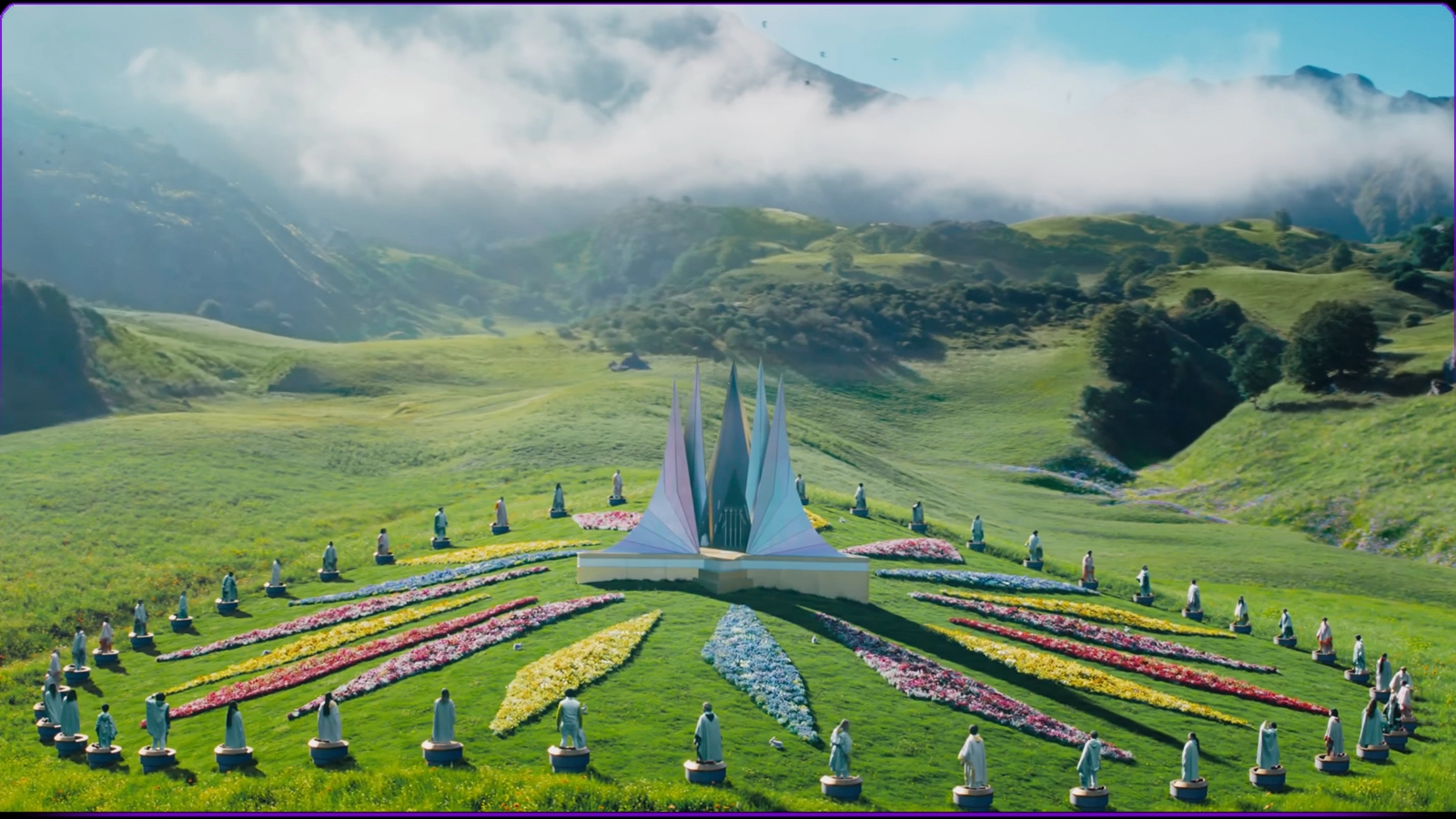
The Hunger Games: Sunrise on the Reaping is the most beautiful movie in the franchise. From its opening moments, everything looks immaculate. The cinematography is sharp, the production design is spectacular, and the costumes are so fabulous that Panem sometimes looks like a Disneyland land you'd actually want to visit.
Which is a little bizarre considering we're supposed to be watching children being sent to their deaths.
Remember the shaky camera of the original Hunger Games? We all still have PTSD from that. Looking back at the 2012 film, there's something almost independent about its appearance. The muted colors, grain, noise, and rough textures gave it a sense of urgency and realism. It wasn't always pretty, but perhaps that was part of its charm.
Fourteen years later, Panem has never looked better. But I'm not sure it has ever felt less horrifying.
There's an interesting visual contradiction in Sunrise on the Reaping. The more beautiful the movie becomes, the deadlier its world gets.
The chariot presentation is a spectacular explosion of color, with clouds of vibrant smoke painting the screen while something horrific unfolds. And the arena? It's easily the most beautiful we've seen in the franchise. A gorgeous landscape filled with colorful flowers that looks like something straight out of Midsommar. I kept expecting Florence Pugh to walk across the screen crying.
There's even a volcano!

It's particularly funny when you remember that 24 years later, Katniss gets thrown into a forest. Apparently, the Capitol's arena designers peaked early.
But there's a missed opportunity in all that beauty. Imagine a field of colorful flowers stained with the blood of the children being forced to kill one another. The contrast between beauty and brutality could have been genuinely disturbing. Instead, the film often seems more interested in showing us how gorgeous everything can look.
And it really does look gorgeous.
The costumes are another highlight. The movie embraces a 1970s-inspired aesthetic, with elaborate hairstyles, extravagant outfits, and a Capitol that seems to have discovered disco. It's fabulous, although it initially made me question the timeline. Is this a parallel universe where the Hunger Games existed instead of our own history? I always understood Panem as a civilization emerging from our future, so seeing these familiar fashions—and even references to Edgar Allan Poe—sent me down a rabbit hole about how much of our culture survives in this world.
Even the tributes have some of the coolest uniforms in the franchise, with fitted short-sleeved tops, high collars, and black-and-white utility vests that combine 1970s athletic fashion with retro science fiction. They look a little like Stormtroopers who wandered into a disco, and I mean that as a compliment.
The retro influences are intentional, but they also make the Capitol feel strangely inviting. And that's an odd feeling to have about a society built on oppression.
Back to where it all began
In many ways, Sunrise on the Reaping feels like a return to the original Hunger Games.
More than the other sequels and prequels, it follows the roadmap of the 2012 movie, with a few twists along the way.
We return to District 12 for the reaping, where an unexpected turn of events sends our protagonist into the Games. We board the train to the Capitol, meet its eccentric personalities, experience the preparations and training, witness the extravagant chariot presentation, sit through Caesar Flickerman's interviews, and eventually enter the arena.
All the familiar ingredients are there.
Even the characters occupy recognizable roles. Glenn Close's Drusilla Sickle brings the eccentric Capitol authority we associate with Effie Trinket, while other familiar faces and personalities help bridge the different eras of Panem.
And the casting is extraordinary.
Jesse Plemons is almost eerily convincing as a younger Plutarch Heavensbee. You immediately recognize the character Philip Seymour Hoffman made so memorable. Maya Hawke as Wiress, Kelvin Harrison Jr. as Beetee, and Lili Taylor as Mags make an impression despite their limited screen time.
Kieran Culkin seems to be having an enormous amount of fun as Caesar Flickerman. Perhaps a little too much. His Caesar is more abrasive than the charmingly unsettling television personality Stanley Tucci portrayed. I'm not entirely convinced this man grows into that version of Caesar, but Culkin certainly makes the role his own.
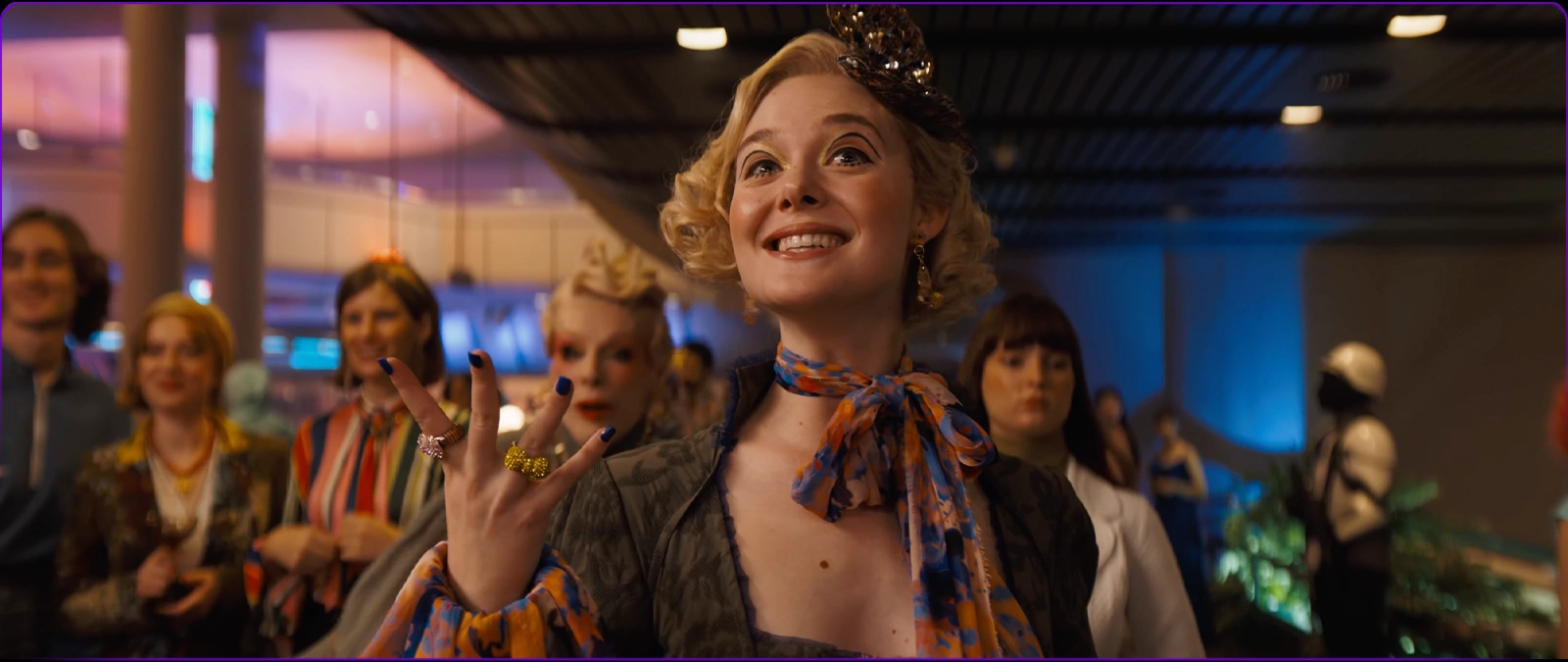
Elle Fanning doesn't particularly resemble Elizabeth Banks, but who cares when she brings this much energy to Effie? The moment she appears, the movie's energy increases by a thousand percent. She's spirited, funny, and surprisingly warm, offering glimpses of the compassion Effie eventually develops in the original films. She's easily one of my favorite returning characters.
Glenn Close, meanwhile, is fantastic. For a moment, I genuinely wondered whether I was watching an Oscar-worthy supporting performance. She commands the screen with such authority and eccentricity that I wanted much more of her.
Unfortunately, that's a recurring problem with the movie. Just when a supporting character becomes interesting, we move on.
Billy Porter is another example. Blink and you might miss him.
Ralph Fiennes delivers a strong performance as President Snow, making him calmly menacing and frighteningly regal. His threats are delivered with such composure that they become even more disturbing. Still, I couldn't entirely shake the feeling that Fiennes was playing his interpretation of Snow rather than a man who would eventually become Donald Sutherland's version.
And that hair! Young Snow and older Snow have relatively conventional hairstyles, but somewhere in between, he apparently decided to experiment with something resembling the 1800s.
But the real star of the film is Joseph Zada.
Joseph Zada carries an entire world
Zada is spectacular as young Haymitch Abernathy.
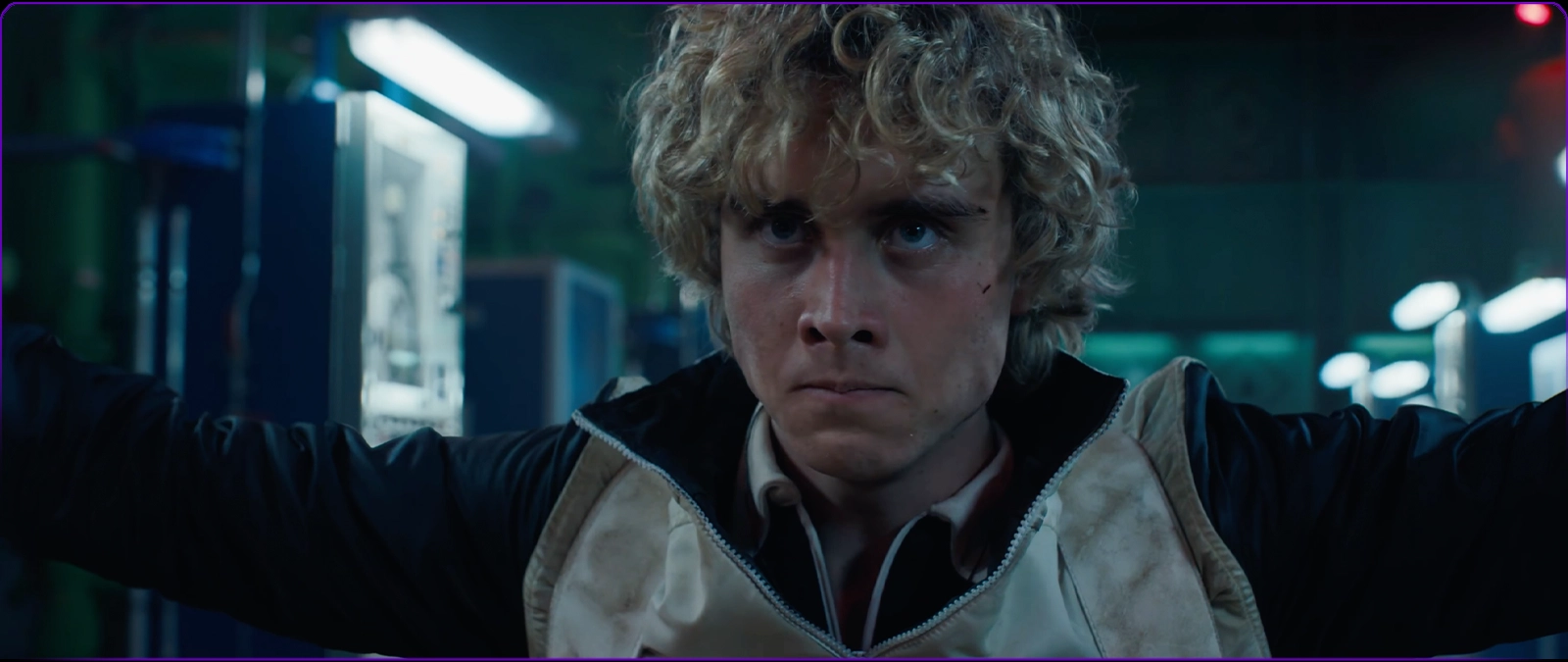
I'm not entirely convinced he looks like a younger Woody Harrelson, but it doesn't matter. His performance is so convincing that he becomes Haymitch almost immediately.
And the movie asks an extraordinary amount of him.
We spend practically the entire film following Haymitch, and Zada has to carry nearly every emotional and physical demand of the story. He's running, fighting, crying, surviving explosions, and being thrown around by an increasingly dangerous world.
Call him Atlas, because he carries this movie on his shoulders.
The action sequences are impressive, and Zada and the stunt team deserve enormous credit for making Haymitch's physical journey feel so exhausting. But it's his emotional performance that makes the character extraordinary.
His happiness, fear, anger, heartbreak, and determination are palpable.
One moment that particularly affected me comes as Haymitch is being lifted toward the arena. He physically shakes with fear. It's such a simple, human reaction, but I can't remember another tribute making me feel that particular terror so vividly.
And that's the beauty of Zada's performance. He doesn't play Haymitch as someone destined to become a cynical survivor. He plays him as a young man full of life who has every reason to want to keep living.
Whitney Peak is wonderful as Lenore Dove, Haymitch's girlfriend. She's charismatic, compassionate, and shares such natural chemistry with Zada that their relationship feels genuinely lived-in. They look like two young people deeply in love, and that emotional connection gives Haymitch's story much of its heart.
The film also introduces us to his family, giving us a glimpse of the young man he was before everything changed.
Knowing the Haymitch we meet in the original movies makes those early moments particularly poignant. We know what kind of man he becomes, but we don't yet understand everything that shaped him.
And the film is remarkably effective at exploring that transformation.
Forty-eight tributes, and not nearly enough time
The newcomers are also fantastic.
McKenna Grace gives Maysilee Donner a fierceness and anger that feel different from many of her previous performances. She's furious, and deservedly so. She even gets to slap Glenn Close, which is glorious.
Ben Wang brings intelligence and personality to Wyatt Callow, a character whose understanding of statistics and betting offers an interesting perspective on the Games. It's also refreshing to see a broader range of ethnic backgrounds represented in the franchise.
Molly McCann is sweet and spunky as Louella, while Iona Bell handles a very different side of the character's storyline with impressive conviction.
Percy Daggs IV is particularly compelling as Ampert. There's something inspiring about seeing one of the youngest and smallest tributes become so determined to challenge the system. His relationship with Haymitch is another highlight.
Laura Marcus is another standout as Silka Sharp, a Career tribute who feels refreshingly different from the franchise's more cartoonish competitors. She approaches the Games with the discipline and confidence of a professional athlete rather than the exaggerated aggression of a movie villain. It's a fascinating interpretation of a child raised to believe that killing other children is a legitimate competition.

And once again, I wanted more time with her.
But here's the problem.
They're all wonderful, and I wanted to spend more time with every single one of them.
Perhaps my biggest frustration with Sunrise on the Reaping is that the supporting characters rarely feel like they have lives beyond Haymitch.
They're there to help him, challenge him, inspire him, or break his heart. They're wonderfully performed, but they're often more like ideas of characters than fully developed people.
And I understand that this is Haymitch's story. But these children have stories, too.
That's particularly frustrating once we enter the arena.
Like Katniss in the original movie, Haymitch spends much of his time separated from the other tributes. But there's an important difference.
Katniss was alone because she was trying to survive. She was hunted, she fought, she formed alliances, and eventually found Peeta. We experienced the Games through her struggle to stay alive.
Haymitch, on the other hand, spends much of his time pursuing a plan that takes him away from the other tributes and the action unfolding around them.
His mission is interesting, but it also means we barely get to see the Hunger Games.
Which is crazy when this particular edition doubles the number of tributes to 48.
The movie introduces potential alliances, rivalries, and fascinating relationships, but once the Games begin, so much of that disappears. We often learn about what happened to other tributes through conversations rather than experiencing their struggles ourselves.
The film also repeatedly uses Haymitch losing consciousness to move the story forward. He wakes up to discover that the Games have continued without him, with other tributes eliminated and major events already over. It's an effective way to emphasize his vulnerability, but the repetition becomes frustrating. Every time he wakes up, I feel like I've missed another part of the movie I came to see.
And it's not as though the movie is unwilling to leave Haymitch's perspective. It occasionally does so when the larger story requires it.
So why not allow us to follow the other tributes?
I wanted to see how those alliances developed, how the other children attempted to survive, and what happened when their plans fell apart.
Instead, we're often left with Haymitch pursuing his own objective while the Games unfold somewhere else.
For a story about 48 children forced to participate in a government-sanctioned massacre, that's a frustrating amount of suffering left outside the frame.
Where did the horror go?
At one point during the movie, I started asking myself a question I hadn't really considered while watching the previous installments: Are we normalizing the murder of children?
After all, this is a franchise where audiences buy tickets to watch teenagers forced to kill one another for entertainment. It's an uncomfortable thought, especially when real-world entertainment has borrowed the language and imagery of the Games.
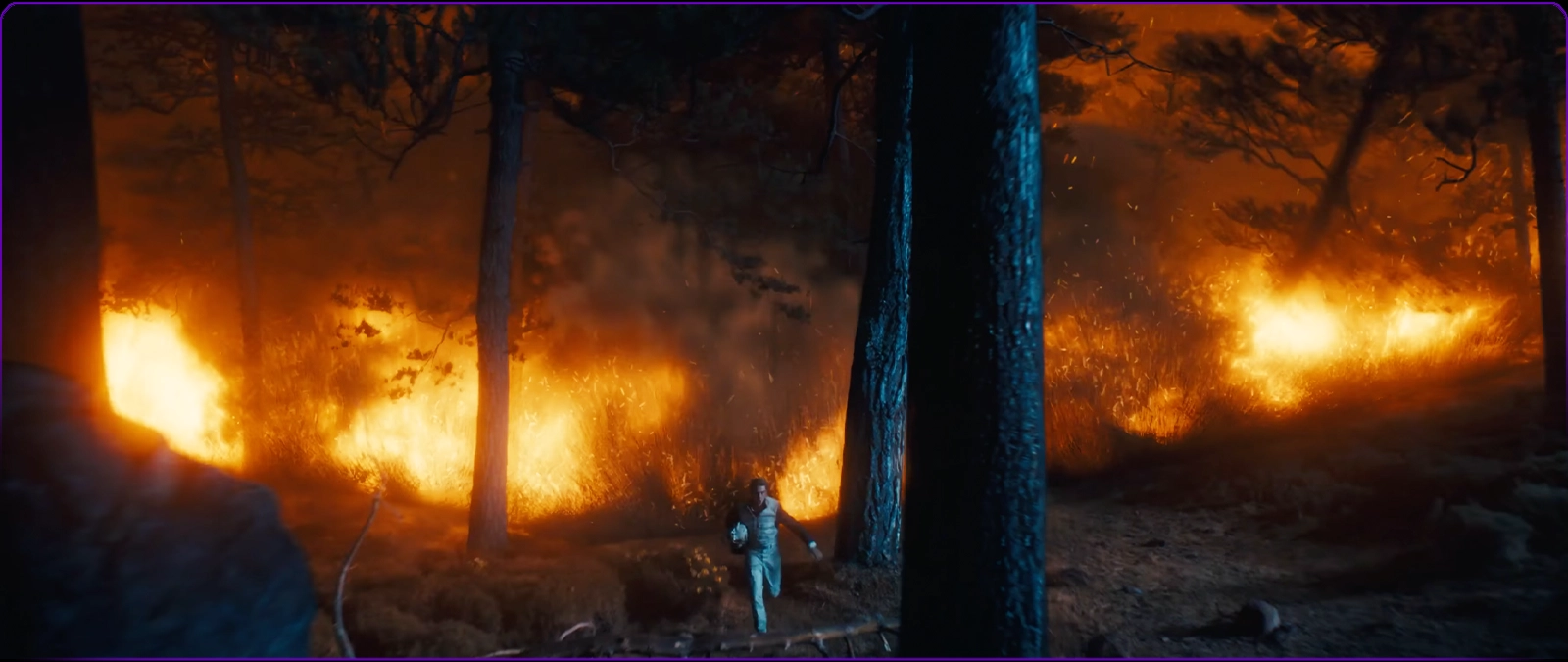
But then I watched how the film handles some of its deaths, and I became frustrated for a different reason.
They're so sanitized that they sometimes feel like telenovela deaths. A dramatic expression, a little blood at the corner of someone's mouth, and that's it.
Even after an enormously destructive sequence, the visible injuries can seem strangely minor.
And I know how ridiculous it sounds to complain that a movie about children murdering each other doesn't have enough blood.
But that's not really my complaint.
It's not about how much blood we see. It's about how much we feel when someone dies.
Look at Mike Flanagan's 2026 Carrie series on Prime Video, which makes the deaths of its young characters feel devastating without needing to rely on excessive gore.
And it's particularly strange coming from Lionsgate, the studio behind Saw and Hostel. I understand that The Hunger Games is a PG-13 franchise, but that doesn't mean the violence has to feel so sanitized.
The Games shouldn't be frightening because they're bloody. They should be frightening because they're cruel.
And when the film spends so little time developing its supporting characters, their deaths become even less emotionally affecting.
Ironically, Sunrise on the Reaping is much more successful at exploring the consequences of violence than depicting the violence itself.
Its quietest and most intimate moments are often its most devastating. When the film allows us to understand what someone stands to lose, it can be absolutely heartbreaking.
I just wish it extended that same compassion to more of its characters.
The real horror of Panem
Watching The Hunger Games in 2026 should feel different from watching it in 2012.
When the first film arrived, Panem felt like a terrifying vision of a dystopian future. Fourteen years later, aspects of that fictional society feel uncomfortably recognizable.
We live in a world where extraordinary wealth and power can be concentrated in very few hands. Where wars continue to devastate communities, children are recruited into armed conflicts, and families struggle to find enough food to survive.
Meanwhile, the wealthiest people can seem as detached from those realities as the citizens of the Capitol are from the suffering in the districts.
Sometimes it feels like we're living in District 12 while watching the Capitol celebrate.
And that's what should make Sunrise on the Reaping terrifying.
Not the number of tributes who die or the amount of blood we see, but the system that allows those deaths to happen.
By the time of the 50th Hunger Games, generations have lived under a government that controls their resources, their freedoms, and even the lives of their children.
The arena is only one expression of that power.
The film does explore these ideas, particularly through Haymitch's relationship with President Snow. Snow understands that threatening someone's loved ones can be more effective than threatening the person directly. His power lies not only in violence, but in making people understand how little control they have over their own lives.
There are also fascinating glimpses into how the Capitol controls information and public perception, shaping the stories its citizens are allowed to believe.
Those moments are genuinely frightening.
And just when the film begins exploring them, it moves on.
I kept wanting to shout at the screen: Give me more of this! This is interesting! This is scary!
Haymitch's attempt at resistance is compelling, but the movie doesn't always make the larger strategy or its potential consequences clear. I understood what he was trying to destroy, but I wanted to understand more about what he and his collaborators hoped would happen afterward.
These are fascinating ideas, but the movie doesn't always explore them with the same ambition it brings to its production design.
For a film running 2 hours and 38 minutes, it's remarkable how many compelling characters and political ideas feel only briefly examined.
And perhaps that's because Sunrise on the Reaping isn't really a movie about Panem or even the Hunger Games themselves.
It's a character study of Haymitch Abernathy.
A beautiful, incomplete tragedy
As a character study, Sunrise on the Reaping is remarkably successful.
Joseph Zada gives us everything we need to understand how a young man full of love, hope, and determination becomes the cynical, traumatized survivor we meet in the original films.
The movie is beautifully crafted, exceptionally acted, and emotionally powerful. It moves surprisingly quickly despite its lengthy runtime, and its exploration of the lasting consequences of oppression is often devastating.
This is the kind of production that looks and feels capable of competing for major awards.
But I can't help thinking about the more ambitious film hiding inside it.
One that allowed us to know the other tributes as deeply as Haymitch. One that made the beautiful arena feel truly horrifying. One that explored the machinery of oppression with the same attention it gives to the suffering of its protagonist.
I don't necessarily think the movie needed to be shorter. If anything, I would have welcomed more time with these characters, whether through a different narrative structure or a more expansive adaptation.
Because when Sunrise on the Reaping allows us to care about someone, it can be extraordinary.
And that's what makes its limitations so frustrating.
The original Hunger Games introduced us to a young woman who wanted to survive and eventually became a symbol of revolution. Sunrise on the Reaping introduces us to a young man whose resistance comes at an enormous personal cost.
It's a meaningful and heartbreaking contrast.
But in 2026, when the themes of inequality, concentrated power, and political oppression feel especially urgent, I wanted the film to challenge me even more.
I wanted to leave the theater frightened not simply by what happened to Haymitch, but by how much of Panem I could recognize outside the theater.
Instead, I left deeply moved by one extraordinary character, while wishing I'd been allowed to know the world—and the people—around him a little better.
Sunrise on the Reaping is the most beautiful Hunger Games movie yet, with one of the franchise's strongest performances.

I just wish its beautiful nightmare had been a little harder to wake up from.