
There's something about partying before 2020 that feels almost impossible to recreate today. The freedom, the chaos, the spontaneity of going out with your friends and not knowing where the night would take you. Maybe COVID changed the way we party. Maybe the world changed. Or maybe we're just getting older.
Watching the opening sequence of Club Kid, Jordan Firstman's hilarious and surprisingly moving directorial debut, brought all those memories rushing back.
It's 2016, and a group of drunk friends piles into an Uber. The driver says he can only take six passengers. One of the girls insists that some of them are just saying goodbye. I counted seven people inside that car. She lied!
The camera spins around the vehicle, capturing the laughter, singing, and wonderful debauchery of a night out. At the center of it all is Peter (Firstman), a New York party promoter who seems to know everyone. When the group arrives at a nightclub, Peter skips the line, brings a few strangers along, and leads everyone inside. The camera follows them in an exhilarating continuous shot until they reach the dance floor, where an explosion of confetti welcomes them.
It's spectacular. It's chaotic. It's everything I remember loving about going out. And for Peter, it's a world that never seems to end.
The Life of the Party
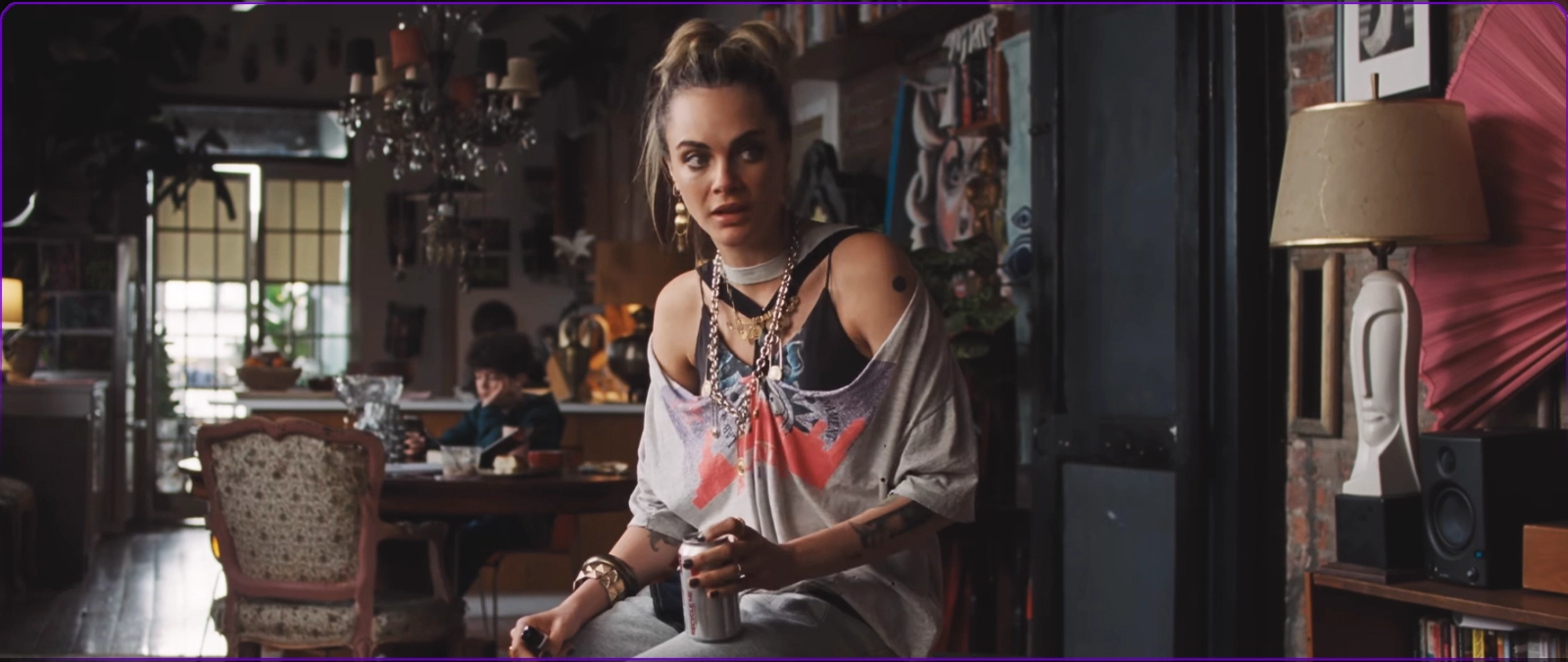
Nearly a decade later, Peter is still living like every night might be the best night of his life. He organizes parties with his longtime friend and business partner Sophie (Cara Delevingne), but while she handles the logistics and responsibilities, Peter relies on his connections, charisma, and seemingly endless supply of energy. Unfortunately, his enthusiasm for partying hasn't evolved much since we first met him.
He's irresponsible, unreliable, and increasingly dependent on drugs. He's also charming, funny, and surrounded by people who love him, even when they're exhausted by his behavior.
Delevingne is terrific as Sophie, effortlessly moving between the glamorous party girl of the opening and a frustrated businesswoman who has spent years cleaning up Peter's messes. As their relationship deteriorates, she reveals a character struggling with her own demons. It's one of Delevingne's strongest performances, and I'd love to see her explore more characters like this.
Then there's Nicky (Eldar Isgandarov), a younger friend who's temporarily staying at Peter's apartment while supposedly looking for his own place. Although judging by how comfortable he's made himself, finding an apartment doesn't seem particularly urgent. Nicky practically steals every scene with wonderfully inappropriate observations. Isgandarov is an absolute delight. Their arrangement also reveals something important about Peter: beneath his irresponsibility, he's generous enough to welcome a friend who needs help, even when that friend drives him crazy.
Peter's comfortable chaos comes crashing down when a woman from his past named Edison unexpectedly arrives at his apartment with Arlo (Reggie Absolom), a young boy who, she informs him, is his son. Peter didn't know Arlo existed.
The woman is played by Kirby Howell-Baptiste, who delivers one of the film's funniest performances. There's something wonderfully precise about her comedic timing. Every reaction lands, every pause feels perfectly measured, and she commands her scenes with effortless confidence. Her appearance is relatively brief, but she makes such an impression that I found myself wondering whether she could enter the supporting actress awards conversation. That's how much I loved her performance.
And just like that, the man who has spent his adult life taking care of the party has to learn how to take care of a child.
Big Daddy, but Make It Gay
What a brilliant idea to give us a gay version of Big Daddy, with a little Three Men and a Baby and Full House thrown in. Like Adam Sandler's character, Peter is an immature, chaotic man who unexpectedly finds himself responsible for a child. The difference? Instead of navigating conventional domestic life, Peter is trying to raise a kid in the middle of New York's queer nightlife.
Peter has absolutely no idea how to be a father. His apartment isn't particularly child-friendly, his lifestyle certainly isn't, and his first attempts at bonding with Arlo are hilariously awkward. But something unexpected happens. He starts trying.
He makes room for Arlo, buys him clothes, tries to enroll him in school, and begins paying attention to someone else's needs. They discover a shared love of music, and Peter realizes that this quiet, extraordinarily knowledgeable little boy might actually be cooler than he ever was.
Absolom is wonderful. His calm, thoughtful presence provides the perfect contrast to Firstman's frantic energy. Their chemistry feels natural, and their growing affection is believable. There's also a lovely physical resemblance between the actors, particularly their curly hair.
Arlo, meanwhile, is adjusting to extraordinary change. He's lost his mother, traveled to another country, and suddenly lives with a father he never knew existed. The film acknowledges his mother's death, including a touching conversation in which Arlo reveals that he understands she died by suicide. But his grief remains largely in the background. Considering everything he's experienced, I wished we could spend more time understanding his emotions rather than primarily experiencing the situation through Peter. Still, Absolom brings remarkable sensitivity to the role.
As Peter and Arlo build their relationship, something beautiful happens: Peter's entire world starts making room for the boy.
The Family You Choose
One of the most beautiful things about Club Kid is that Peter already has a family before Arlo arrives. His friends are his chosen family, a wonderfully chaotic collection of queer people who party together, protect one another, and occasionally make terrible decisions together. When Sophie ends her partnership with Peter, they even rally around him and cancel her on Twitter. Because what's a queer friendship without a little online drama?

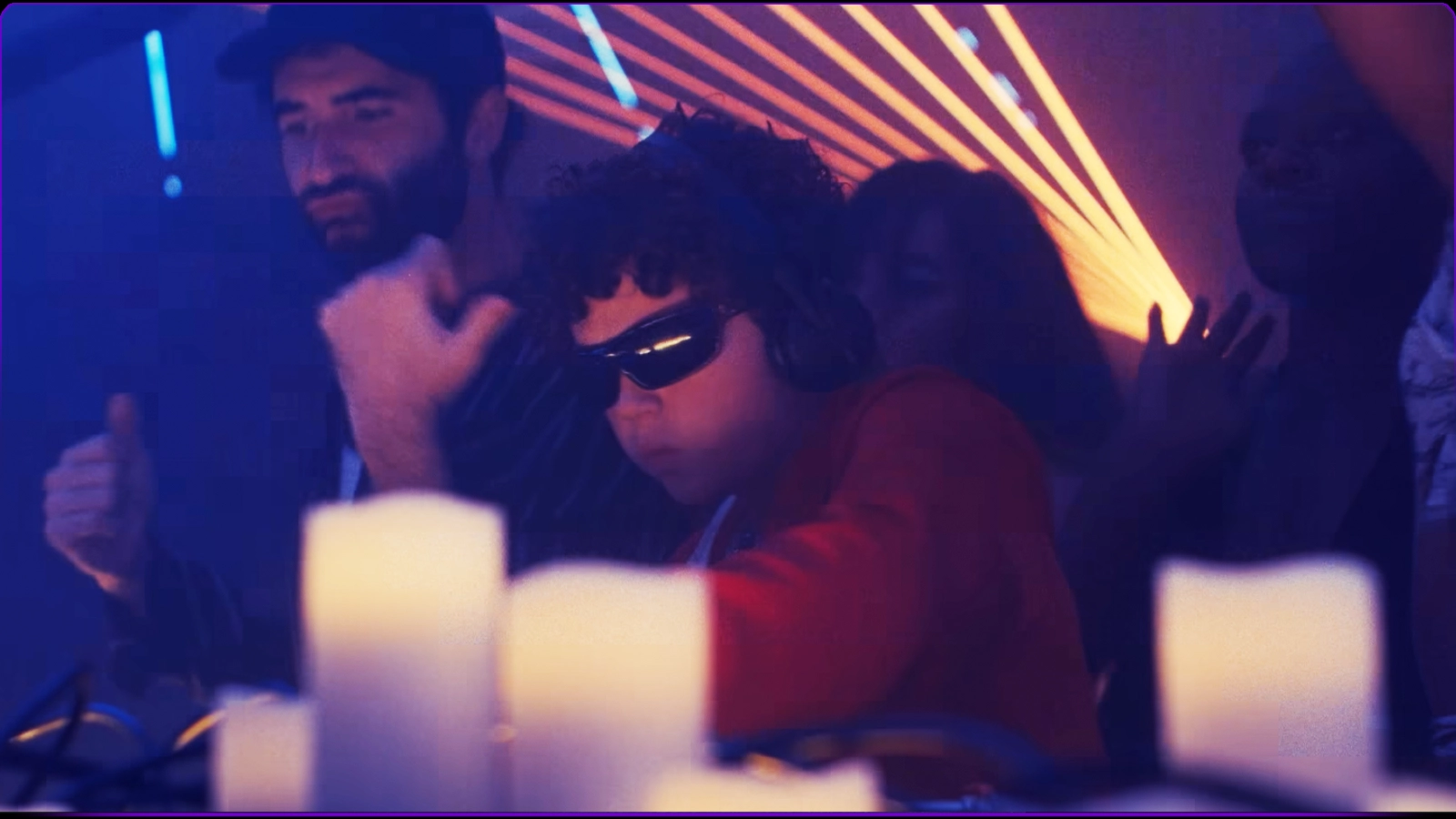
When Arlo arrives, his friends welcome him without hesitation. They visit the apartment, treat him with affection, and make him comfortable in their world. Saffron (Saturn Risin9), a DJ and longtime friend, recognizes Arlo's musical talent and becomes his mentor. When he performs at a club for the first time, the community cheers him on. Arlo doesn't simply gain a father. He inherits an entire chosen family.
Even Nicky finds his own unconventional family when he moves in with Peter's elderly neighbor. He announces that he's straight now because they're apparently in a relationship, and starts wearing the most boring suits imaginable. It's ridiculous, hilarious, and oddly sweet.
Family isn't always defined by blood, marriage, or conventional relationships. Sometimes it's the people who show up, encourage your dreams, defend you, and celebrate your victories. Peter's friends aren't perfect, and neither is Peter. But their affection is real.
A Queer World That Looks Like Real Life
Another thing I love is the diversity. Saffron, a Black trans woman, is among Peter's closest friends and becomes Arlo's mentor. Oscar (Diego Calva), Peter's potential love interest, is Mexican. Peter's circle includes friends of all colors and identities. And, of course, there's Sophie, representing the bitchy white girl every gay group seems to have. Because diversity means everybody gets a seat at the table, even the friend who's judging everyone sitting around it.
There's even a hilarious moment when Peter wonders about Arlo's ethnicity because the boy looks like he might be mixed with something. He isn't entirely sure what his own son is!
These characters aren't introduced to teach a lesson. They have personalities, flaws, friendships and stories. Their identities aren't erased for audiences unfamiliar with queer culture. Firstman presents this world with an insider's familiarity and lets everyone else take a peek. The diversity doesn't feel manufactured. It simply looks like real life.
Growing Up Without Feeling Grown Up
For those of us in our 30s and 40s who know queer nightlife, Peter's struggle feels familiar. Many queer people don't necessarily follow the traditional milestones of marriage, children, or settling down. Some of us can enjoy partying and freedom longer. There's nothing wrong with that. But what happens when you start wondering whether you're actually growing up?
I identified with Peter. I know what it's like to want to become better while feeling like an impostor adult, waiting for the switch in your brain to flip and suddenly make you responsible, productive, mature. Sometimes I still feel like my mother's little kid.
It's embarrassing, comforting, frustrating, and strangely hopeful all at once. Growing older comes with responsibilities, but I love still feeling young, having dreams and believing my best experiences might still be ahead.
Peter doesn't need to stop partying to become a better person. He needs to recognize that his choices have consequences when someone depends on him. Arlo gives him something he didn't know he needed: a reason to try.
Love, Family, and the Possibility of Change
The film grows tender as Peter and Arlo bond through music. Then there's Oscar, Arlo's social worker, played by Diego Calva. Oscar counsels Arlo and helps Peter navigate services. Calva is wonderful: warm, handsome, charming, quietly charismatic. Oscar has made mistakes in his past and built a new life in New York, becoming a social worker and working toward a practice of his own. He represents an emotionally mature contrast to Peter. It's lovely to see a Mexican character with aspirations and a complex life, not reduced to stereotypes.
For a while, Peter's life starts looking like a fairy tale. A son who loves him, a more responsible routine, the possibility of romance, a home. And honestly, this is where the movie almost lost me. Everything seemed too convenient. His transformation seemed remarkably quick. I wondered whether Firstman would give us an uncomplicated happy ending.
But Club Kid had other plans.
Without revealing what happens, the final act challenges that optimism. Peter's choices catch up with him. The film explores society's expectations of parents, the difference between affection and stability, and the question of how we live with past mistakes even after genuinely changing. Queerness doesn't excuse irresponsibility, but an unconventional family isn't inherently less loving or secure. It's painful and complicated—and far more honest than the fairy tale I expected.
A New Side of Jordan Firstman
Firstman has always been funny, although his abrasive persona can be overwhelming, as in Rotting in the Sun. Here, he's still loud, impulsive and occasionally unbearable, but he reveals the insecurity beneath Peter's confidence. His scenes with Absolom are especially moving.
As writer and director, Firstman balances comedy and emotion beautifully. The Uber and nightclub entrance are exhilarating; the rest of the film rarely matches that visual inventiveness and becomes more conventional. But his achievement is in the characters. He lets them be funny without making them jokes and make mistakes without condemning them. The first third is absolutely hilarious, and the emotional scenes still find room for humor. It's a remarkable feature directorial debut.
The Party Ends, but Life Goes On
What I love is that the film never suggests Peter must abandon his queer identity or community to grow up. It celebrates freedom and unconventional families without ignoring the complications. Marriage, children, and traditional households aren't prerequisites for a meaningful life.
What does it mean to become someone you can be proud of? Can we change without abandoning who we were? Can we keep growing when there's no guarantee our efforts will be rewarded? The ending offers something more beautiful than an easy fairy tale: hope.
I watched Club Kid twice. The first time I gave it four stars. I was analytical, questioning how conveniently everything was falling into place. The second time I let myself experience the movie. I cried both times. During the first screening, I noticed a man beside me crying several times before the film finally got me too. The second time, I think I cried even more, because I knew where it was going and perhaps understood Peter better.
I know his world, his friends, his parties, and the feeling of being an adult without feeling like you've become one. I also know how family love can change you, save you, and make you want to be better for yourself and others.
Maybe that's the beauty of growing older. We don't have to stop being who we were to become who we want to be.
I changed my rating to five stars. I realized a five-star movie is one I want others to experience. I took my ex to see it, and I'm probably going to make my mother watch it, too.
Because Club Kid made me laugh, made me cry, and reminded me that growing up doesn't mean having everything figured out.
Sometimes it just means finding someone, or something, worth becoming better for.
★★★★★ — 5/5 One of my favorite films of the year, one of the best comedies of the year, and one of my favorite queer films ever.
Major spoilers: Read our separate Club Kid ending explained.